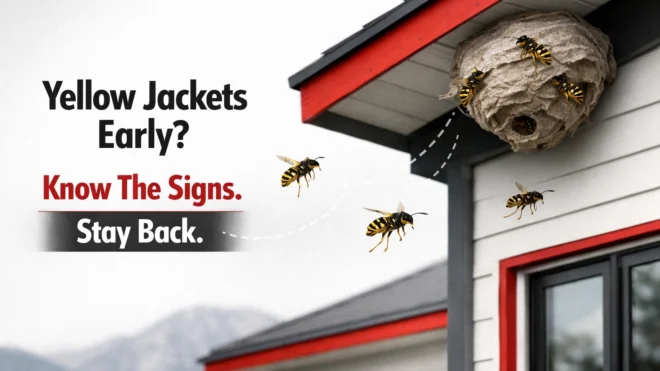
Wasps get more persistent in late summer because colonies reach peak size just as their natural food supply declines, so workers search harder for sweet drinks, ripe fruit, outdoor meals, and trash. To keep a Denver patio safer, cover food and drinks, wipe spills, seal trash lids, remove fallen fruit, and never disturb an active nest.
Few things disrupt a beautiful Denver afternoon like wasps circling your drink, hovering around the grill, or appearing near the patio where your children and pets play. If you’ve noticed more yellowjackets around your yard in August or September, you’re not alone, and you’re not imagining it.
Late summer is often the busiest time of year for wasps in the Denver metro area. Colonies have grown, food sources change, and worker wasps spend more time searching for sweet drinks, ripe fruit, outdoor meals, and trash. They are not necessarily “angry,” but they can become more persistent and defensive during this seasonal shift.
The good news is that a few practical changes can make your patio less attractive, while professional Denver wasp control can help when activity points to a nest nearby.
Why Do Wasps Become More Aggressive in August and September?
Late-summer wasp colonies hit peak size just as their natural food supply declines, so workers forage harder and defend more aggressively – which is why your patio suddenly feels crowded. Colorado State University Extension documents this seasonal shift in its nuisance wasps fact sheet.
Wasps and yellowjackets play a useful role in the environment by hunting other insects and helping control certain pest populations. However, their behavior around people often changes as summer winds down.
Several factors can contribute to increased activity:
- Colonies are larger. A nest that was easy to overlook in spring can contain many more workers by late summer.
- The colony’s food needs change. Earlier in the season, workers often focus on collecting protein for developing larvae. As the colony matures, they may search more aggressively for sugar.
- Outdoor food is easy to find. Soda, fruit, beer, barbecue sauce, pet food, and uncovered desserts can all attract foraging yellowjackets.
- Trash and recycling provide reliable smells. Sticky cans, bottles, and overflowing bins can draw wasps toward your patio.
- Nests are more established. Wasps may defend their home more actively if people, pets, lawn equipment, or furniture get too close.
That is why a patio in Lakewood, Aurora, Arvada, Westminster, or central Denver can suddenly feel much more difficult to enjoy in late summer. Understanding the pattern makes prevention easier, so your next step is to remove the most common attractants.
How Do You Make a Denver Patio Less Attractive to Wasps?
Cover food and sugary drinks, wipe spills promptly, keep trash lids sealed, remove fallen fruit, and eliminate standing water. Wasps come for food and moisture first – remove those and most patio visits end on their own.
You do not need to stop enjoying your backyard. Instead, focus on reducing the food, water, and shelter that bring wasps close to people.
Keep Food and Drinks Covered
When you eat outside, use lids, food covers, or sealed containers. Pay special attention to sweet drinks, which can attract yellowjackets quickly.
After an outdoor meal:
- Wipe up soda, juice, alcohol, and syrup spills right away.
- Rinse plates and utensils before leaving them outside.
- Cover serving dishes between meals.
- Check cups and cans before drinking from them.
- Keep children from walking around with uncovered sweet drinks.
A straw or cup lid can also help reduce the chance of a wasp getting inside a drink. If a wasp lands on your food or beverage, avoid swatting at it. Cover the item, step away calmly, and discard it if needed.
Secure Trash, Recycling, and Compost
Wasps can follow food odors from surprisingly far away. Keep outdoor garbage containers closed with tight-fitting lids, and place them away from the main seating area when possible.
You can also:
- Rinse soda cans, bottles, and food containers before placing them in recycling.
- Tie off trash bags instead of leaving them open.
- Avoid letting garbage overflow.
- Keep compost bins securely closed.
- Bring pet food indoors after mealtime.
These steps help with other Denver pests, too, including ants, flies, and rodents. Reducing attractants now can make the entire outdoor area more comfortable as the season continues.
Pick Up Fallen Fruit and Clean Sticky Surfaces
If you have an apple, pear, plum, or crabapple tree, inspect the ground regularly. Overripe or split fruit can become a strong yellowjacket attractant.
Remove fallen fruit and clean:
- Patio tables
- Grill surfaces
- Outdoor counters
- Recycling containers
- Areas beneath children’s picnic tables
- Spots where pet food or treats may have been left
A clean patio is not always enough to solve a nest problem, but it can reduce the number of wasps casually visiting the area.
What Are the Signs of a Wasp Nest Nearby?
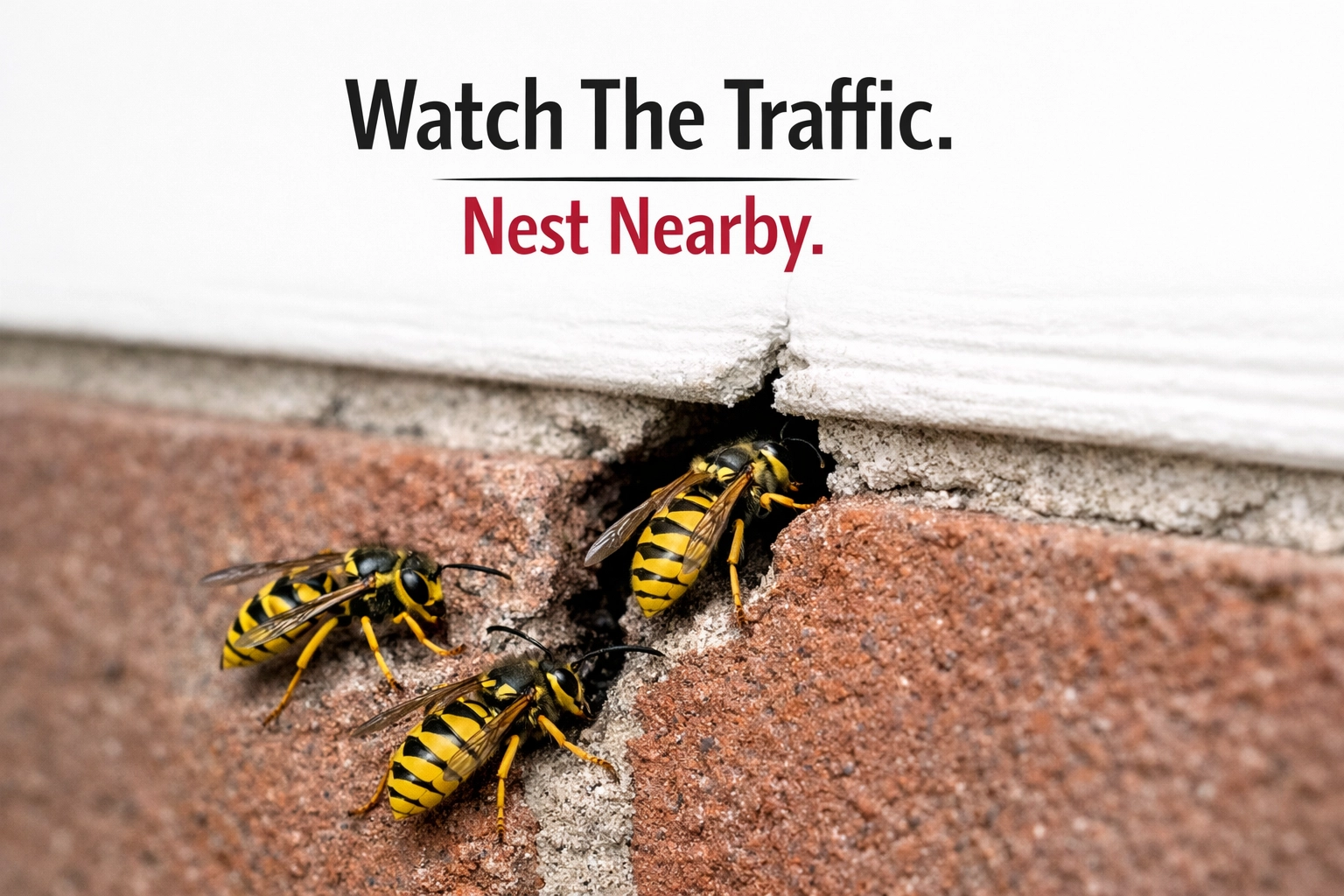
Steady wasp traffic to and from one spot – a wall vent, deck corner, or hole in the ground – is the clearest sign of a nest, even when the nest itself stays hidden. Observe from a distance; never probe the entry point.
The nest itself may be hidden, especially when yellowjackets build underground or inside a wall void. Instead of searching closely, observe activity from a safe distance.
Telltale signs can include:
- Wasps repeatedly entering and leaving one crack, hole, or gap
- A steady flight path near the roofline, deck, siding, or foundation
- Increased activity around a ground hole or landscaping feature
- Wasps emerging from beneath concrete, steps, or a porch
- Buzzing or faint movement inside a wall
- Multiple wasps appearing whenever you move a patio chair, planter, or piece of equipment
- Defensive behavior near one specific area
Common nesting locations around Denver homes include eaves, soffits, sheds, attics, wall voids, dense shrubs, ground holes, and spaces beneath porches. Paper wasps may build exposed nests under protected surfaces, while yellowjackets often choose hidden locations.
Do not plug, knock down, hose, or disturb an active nest. Blocking an opening can force wasps into an unexpected exit point, including the inside of your home. If the nest is near a doorway, play area, walkway, or frequently used patio, professional inspection is usually the safest next step.
For more help identifying warning signs, read our guide to the five signs of a yellow jacket nest in Denver.
What Should You Do When Wasps Are Around Your Patio?
Stay calm, move slowly, cover food and drinks, and keep children and pets away. Leave the area if wasps become defensive.
A single wasp near your table does not automatically mean there is a nest on your property. It may simply be foraging. However, several wasps or repeated activity deserve more attention.
If wasps begin gathering:
- Stay calm and move slowly. Avoid waving your arms or swatting.
- Cover food and drinks. Ask everyone to pause the meal and step indoors if activity continues.
- Keep children and pets away. Curious dogs and barefoot children can accidentally disturb ground nests.
- Wear closed-toe shoes. This is especially important when walking through grass or garden beds.
- Avoid strong fragrances. Perfume, scented lotion, and heavily scented hair products can sometimes attract insects.
- Leave the area if wasps become defensive. Go inside or into a vehicle and close the doors.
Never use a ladder to reach a nest, spray an unknown product into a wall or roof opening, or attempt removal while standing directly beneath the colony. A professional can identify the likely nest location and recommend a targeted treatment plan.
When Should You Call a Denver Wasp Control Professional?
Professional help makes sense when the activity is persistent, the nest is hidden, or the area is difficult to avoid. You should consider calling for an inspection if:
- Wasps repeatedly enter one point in your home’s exterior.
- You find a nest under an eave, porch, deck, or roofline.
- Yellowjackets are coming from the ground near a walkway.
- Wasps are entering your home.
- Someone in your household has a known sting allergy.
- Children, older adults, or pets regularly use the affected area.
- A DIY treatment made the activity worse.
- You cannot safely reach or identify the nest.
One A.P. Pest Control customer, Julia Mullen, shared that yellowjackets were nesting beneath the concrete of her back porch. After a DIY attempt worsened the problem, our team treated the hive, and she reported that the yellowjackets appeared to be “100% gone.” Her experience is a helpful reminder that hidden nests can be more complicated than they first appear.
Another customer, Steven Hewes, praised Elijah after he treated a wasp and spider problem, noting that he answered questions and was extremely helpful. That kind of clear communication matters, especially when you want to know what is happening around your family’s home.
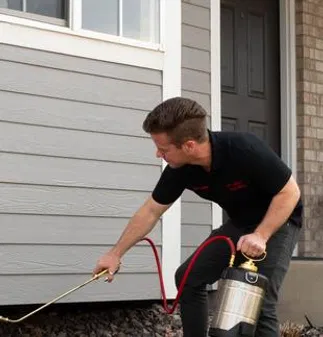
At A.P. Pest Control, we inspect the situation, explain your options, and tailor treatment to your property. We treat every customer like family, provide honest and competitive pricing, and back our work with a 100% satisfaction guarantee. The goal is not to dramatize the problem: it is to help you regain peace of mind and enjoy your patio again.
What Should You Do If Someone Is Stung?
Wash the sting with soap and water, apply a cold pack for 10-15 minutes, and watch for signs of an allergic reaction – difficulty breathing, swelling beyond the sting site, or dizziness means call 911. For treating products, always follow the label; the EPA’s safe pest control guidance covers safe use around homes and pets.
Most stings cause temporary pain, redness, and swelling. Wash the area with soap and water, and apply a cold pack for 10 to 15 minutes. Follow product-label directions if you use an over-the-counter antihistamine or pain reliever.
Seek emergency medical care immediately for signs of a severe allergic reaction, including:
- Trouble breathing
- Swelling of the face, lips, tongue, or throat
- Widespread hives
- Dizziness or fainting
- Confusion or extreme weakness
If multiple people are stung, or if a child or pet is stung repeatedly, contact a medical or veterinary professional promptly.
Enjoy a Safer Patio This Late Summer
Wasps are a normal part of Colorado’s warm-weather landscape, but they should not take over your outdoor space. Cover food, clean spills, secure trash, remove fallen fruit, and watch for repeated traffic near cracks or hidden openings.
If activity continues, or if a nest is close to your family’s daily routine, contact A.P. Pest Control for friendly, local help. Call (720) 327-1750 to discuss your wasp problem, ask questions, or schedule an inspection. We serve homeowners, businesses, landlords, and non-profit organizations throughout the Denver metro area with a personal touch and a commitment to your peace of mind.
For more information about our broader pest services, visit our Denver pest control services page.
Frequently Asked Questions
Why are wasps more active in Denver during August and September?
Late-summer wasp colonies hit peak size just as their natural food supply declines, so workers forage harder and defend more aggressively. They spend more time searching for sweet drinks, ripe fruit, outdoor meals, and trash.
How can I keep wasps away from my Denver patio?
Cover food and sugary drinks, wipe spills promptly, and keep trash lids sealed. Remove fallen fruit, eliminate standing water, and bring pet food indoors after mealtime.
How can I tell if there is a wasp nest close by?
Steady wasp traffic to and from one spot, such as a wall vent, deck corner, or hole in the ground, is the clearest sign of a nest. Other signs include buzzing or faint movement inside a wall and defensive behavior near one specific area.
Should I remove a wasp nest myself?
Do not plug, knock down, hose, or disturb an active nest. Blocking an opening can force wasps into an unexpected exit point, including the inside of your home.
What should I do if someone gets stung by a wasp?
Wash the sting with soap and water and apply a cold pack for 10 to 15 minutes. Seek emergency medical care immediately for signs of a severe allergic reaction, such as trouble breathing, swelling of the face, lips, tongue, or throat, or dizziness.