
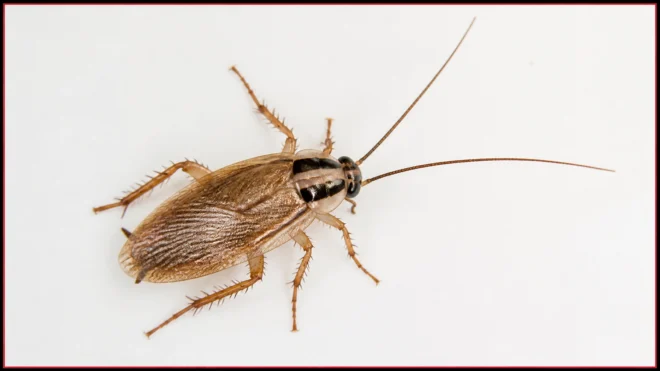
A German cockroach is a small, flat, oval roach that is light tan to medium brown and about 1/2 to 5/8 inch long. The clearest marker is two dark, parallel stripes on the shield-like plate just behind its head. Adults have wings but rarely fly. In Denver homes they are usually found in kitchens and bathrooms.
Few things disrupt a quiet evening in your Denver home quite like catching a sudden, scurrying movement out of the corner of your eye. You flip on the kitchen light, and there it is: a small, tan insect dashing beneath the baseboard. If your heart sank at that moment, you’re not alone. Finding a roach in your home is frustrating, uncomfortable, and can make even the cleanest kitchen feel "off."
In the Denver Metro area, we encounter several different types of roaches, but the one that causes the most trouble for homeowners is the German cockroach. Identifying them correctly is the first, and most important, step toward reclaiming your peace of mind. Not all roaches are created equal; while some are just "lost" visitors from the backyard, the German cockroach is a specialist at living indoors alongside humans.
In this guide, we’ll help you identify exactly what a German cockroach looks like, how to tell it apart from its "cousins," and why knowing the difference matters for your home and family.
What Does a German Cockroach Look Like? Spotting the "Racing Stripes"
An adult German cockroach is small, light tan to medium brown, and has two dark, parallel stripes on the plate just behind its head. No other common household roach in Colorado has this exact marking.
If you’re asking, "What does a German cockroach look like?" you’re likely looking for a way to confirm your suspicions. While most people just see a "brown bug," there are specific physical markers that make the German cockroach (Blattella germanica) unique.
1. The Definitive "Racing Stripes"
The most recognizable feature of an adult German cockroach is located right behind its head. If you can look closely (perhaps with a flashlight or a magnifying glass), you will see a small, shield-like plate called the pronotum.
On a German cockroach, this shield features two dark, parallel longitudinal stripes. These look like tiny "racing stripes" or a small "equal sign" running from the head toward the wings. No other common household roach in Colorado has this exact marking. If you see these stripes, you are almost certainly looking at a German cockroach.
2. Size and Shape
German cockroaches are relatively small compared to other species you might find in a basement or crawlspace.
- Length: Adults typically measure between 1/2 inch and 5/8 inch long.
- Shape: They have a flat, oval-shaped body that is somewhat almond-like or elongated. Their flat profile allows them to squeeze into incredibly tight crevices, such as the gaps behind your kitchen cabinets or inside your microwave’s electronics.
3. Coloration
While they are often described as "brown," their true color is a light tan to medium brown. They lack the deep reddish-mahogany hue of the larger American cockroach or the oily black appearance of the Oriental cockroach. Their lighter color often helps them blend in with wooden cabinets or cardboard boxes.
4. Wings and Movement
Adult German cockroaches have fully developed wings that cover their entire abdomen. However, you will rarely, if ever, see them fly. Instead, they are incredible sprinters. They rely on their six spiny legs to scurry away the moment they detect light or vibration. If a roach flies toward you, it is likely a different species, as German cockroaches prefer to keep their feet on the ground.
Identifying the Next Generation: Nymphs and Egg Cases
A German cockroach problem rarely involves just one adult. Because they breed so rapidly, you are just as likely to spot their young (nymphs) or their egg cases (oothecae).
What Do Young German Cockroaches Look Like?
Nymphs are smaller than adults and lack wings, but they are just as active.
- Color: They are much darker than the adults, often dark brown or nearly black.
- Markings: Instead of the two distinct stripes, young nymphs often have a single, pale tan stripe running down the center of their backs.
- Size: They can be as small as a grain of rice when they first hatch, making them very easy to overlook.

What Does a German Cockroach Egg Case Look Like?
A German cockroach egg case is light brown or yellowish-tan, purse-shaped, and about 1/4 to 3/8 inch long, with visible ridges along the sides.
Female German cockroaches are unique because they carry their egg cases with them until just before they are ready to hatch. These cases are:
- Color: Light brown or yellowish-tan.
- Shape: Purse-shaped and about 1/4 to 3/8 inch long.
- Ridges: They have visible horizontal ridges along the sides.
If you see a roach with a small "tail" or capsule protruding from its rear, it’s a female carrying dozens of potential new roaches. This is a clear sign that a professional approach is needed to stop the cycle.
How Do German, American, and Oriental Cockroaches Differ?
German cockroaches are small and light tan with two dark stripes. American cockroaches are large and reddish-brown, and Oriental cockroaches are medium-sized and shiny black or dark brown.
It is common for Denver homeowners to confuse different roach species. Identifying which one you have is crucial because the treatment for a "visitor" roach is very different from the treatment for an "invader" like the German cockroach.
| Feature | German Cockroach | American Cockroach | Oriental Cockroach |
|---|---|---|---|
| Size | Small (1/2" – 5/8") | Large (1.5" – 2") | Medium (1") |
| Color | Light Tan/Brown | Reddish-Brown | Shiny Black/Dark Brown |
| Markings | Two dark "racing stripes" | Pale yellow edge on shield | None (Solid dark color) |
| Location | Kitchens/Bathrooms | Basements/Sewers | Drains/Crawlspaces |
| Flight | Rarely flies | Can fly/glide | Cannot fly |

In our experience serving the Denver Metro area, we often find American cockroaches in the older plumbing of homes in areas like Capitol Hill or Highlands, while German cockroaches are frequently found in kitchens and bathrooms of apartments, townhomes, and single-family houses across Aurora, Lakewood, and Thornton.
Why Do German Cockroaches Live in Denver Homes?
German cockroaches are "obligate" indoor pests, meaning they struggle to survive outdoors in Colorado’s dry, fluctuating climate. Our homes provide the perfect sanctuary:
- Warmth: As temperatures drop in the Rockies, the consistent 70-degree warmth of your home is an irresistible magnet.
- Moisture: Denver’s dry air makes the water found in your sink drains, dishwasher leaks, or pet bowls a vital resource for them.
- Connectivity: In multi-unit housing or townhomes, these roaches can easily travel between walls through shared plumbing and electrical lines.
Because they stay indoors year-round, a German cockroach population doesn't "die off" in the winter. Instead, they hunker down and continue to multiply, which is why early identification is so important.
What Should You Do If You Spot a German Cockroach?
Remove food and water sources, seal the gaps around plumbing pipes, and have a professional confirm the species.
Discovering a German cockroach can feel overwhelming, but the problem is entirely solvable with the right approach. Here is what you can do right now:
1. Eliminate the "Free Buffet"
German cockroaches are motivated by food and water.
- Dry the Sinks: Wipe down your sinks and tubs before bed. A single drop of water can sustain a roach for days.
- Seal Food: Move open bags of cereal, crackers, or pet food into airtight plastic or glass containers.
- Clean Behind Appliances: Crumbs and grease spills behind the stove or under the refrigerator are prime feeding grounds.
2. Seal the Entries
Use silicone caulk to seal gaps around plumbing pipes where they enter the walls under your sinks. This restricts their "highway" system through your home.
3. Seek Professional Insight
While DIY baits can sometimes help, German cockroaches are notoriously resilient and have developed resistance to many over-the-counter sprays. Furthermore, many store-bought "bug bombs" can actually cause the roaches to scatter deeper into your walls, making the problem harder to fix.
At A.P. Pest Control, we treat every customer like family. We understand the stress these "uninvited guests" cause. Our team provides expert inspections to confirm the species and creates a tailored plan, whether you are in a residential home or managing a commercial property, to ensure the problem is handled correctly the first time.

You Don't Have to Fight Them Alone
Identifying a German cockroach is the first step toward a pest-free home. By looking for those "racing stripes" and understanding their behavior, you’ve already taken a proactive stance. Remember, seeing a roach isn't a reflection of your home's cleanliness: these pests are hitchhikers that can enter on grocery bags, cardboard boxes, or from neighboring units.
If you’ve spotted a mysterious scurry in your Denver home and want a professional, friendly set of eyes to take a look, we’re here to help. From Littleton to Thornton, we back all our work with a 100% satisfaction guarantee, ensuring you can go back to enjoying your home without the worry.
Ready to reclaim your kitchen? Contact us today or call (720) 327-1750 for an expert inspection and a personal touch you won't find anywhere else.
Frequently Asked Questions
What is the most distinct feature of a German cockroach?
The most recognizable feature of an adult German cockroach is the two dark, parallel stripes on the pronotum, the shield-like plate just behind its head. No other common household roach in Colorado has this exact marking.
Do German cockroaches fly?
Adult German cockroaches have fully developed wings, but you will rarely, if ever, see them fly. They rely on their legs to scurry away the moment they detect light or vibration.
How big is a German cockroach compared to an American cockroach?
Adult German cockroaches typically measure between 1/2 inch and 5/8 inch long. American cockroaches are large, about 1.5 to 2 inches.
Does seeing a German cockroach mean my home is dirty?
No. Seeing a roach is not a reflection of your home’s cleanliness. These pests are hitchhikers that can enter on grocery bags, cardboard boxes, or from neighboring units.
Do German cockroaches die off in winter?
No. Because they stay indoors year-round, a German cockroach population does not die off in the winter. They hunker down and continue to multiply, which is why early identification is so important.