Carpet beetles and bed bugs look different, leave different clues, and cause different problems. Carpet beetles do not bite; their larvae damage natural materials such as wool, fur, feathers, and silk. Bed bugs are flat, reddish-brown, and feed on blood. To get rid of carpet beetles, find and remove the source, clean thoroughly, and protect susceptible items.
By A.P. Pest Control
Finding an unfamiliar bug or shed skin in your home can make your mind jump straight to bed bugs. You’re not alone, and the good news is that carpet beetles do not bite people. Learning what to look for can help you tell these pests apart and choose a calm, practical next step.
Carpet Beetles vs Bed Bugs: How Can You Tell Them Apart?
Carpet beetles and bed bugs look different, leave different clues, and cause different problems. Carpet beetle larvae damage certain natural materials, while bed bugs feed on blood. Bites or itchy spots by themselves don’t confirm bed bugs, so inspect for physical evidence before deciding what you’re dealing with.
| What to check | Carpet beetles | Bed bugs |
|---|---|---|
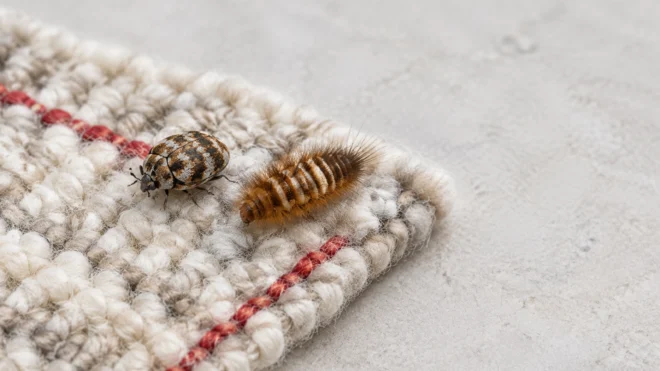
| Appearance | Adults are small, oval beetles, often dark or patterned. Larvae are elongated and bristly or fuzzy. | Adults are flat, oval, reddish-brown, and wingless. Young bed bugs are smaller and paler. |
| Typical size | Many adults found in homes are about 2–5 mm long. | Adults are about 6 mm long, roughly the size of an apple seed. |
| Where to look | Along carpet edges, under furniture, in closets, stored woolens, floor cracks, and around lint or dead insects. | Mattress seams and tags, bed frames, headboards, nearby furniture, and other protected spots near where people rest. |
| Telltale signs | Hairy larvae, shed larval skins, or damage to susceptible fabrics. | Live bugs, tiny pale eggs or shed skins, dark spotting, or rusty stains near sleeping areas. |
| Bites or skin reaction | They do not bite. Larval hairs can irritate skin in some people. | They feed on blood and can bite, but people’s reactions vary. |
| Damage | Larvae may damage wool, fur, feathers, silk, and other suitable materials. | Bed bugs do not eat fabrics; they hide near people and feed on blood. |
Carpet beetle adults are often rounded and may have mottled markings; the larvae are the stage most likely to damage household materials. For more identification help, see Colorado State University Extension’s carpet beetle guide.
Do Carpet Beetles Bite People?
No, carpet beetles do not bite people or feed on blood. Their larvae have bristly hairs that can irritate some people’s skin, creating a rash-like reaction that may be mistaken for bites. Bed bugs do bite, but a skin reaction alone cannot confirm their presence; look for insects or other physical evidence.
If you have itchy marks, try not to diagnose the cause from their shape or pattern. Reactions vary, and other insects or skin conditions can look similar. The U.S. Environmental Protection Agency explains that bites are a poor indicator of bed bugs.
Where Do Carpet Beetles Hide in Denver Homes?
Carpet beetle larvae usually stay close to a food source, while adult beetles may wander away from where they developed. In Denver homes, check quiet, undisturbed places that collect lint, hair, dead insects, or natural-fiber materials, especially older homes with wool rugs, stored clothing, or little-used closets.
Inspect these areas with a flashlight:
- Along carpet edges and under area rugs
- Beneath seldom-moved furniture and cushions
- In closets, attics, and storage boxes with wool, fur, feathers, or silk
- Around floor registers, cracks, and baseboards
- Near windows, where dead insects may collect
- Around pet hair, lint, or old nests near the home
Colorado’s climate shapes when you may notice activity, but it doesn’t mean every sighting has the same cause. CSU Extension notes that adult beetles and wandering larvae are often found indoors in late winter and early spring; sightings can also become noticeable in spring and fall as conditions shift and adults move around. Denver’s dry indoor winter air doesn’t create carpet beetles, but heated homes can let household pests remain active indoors. Check seasonal storage and rugs when you switch clothing or bedding.
What Signs Point to Carpet Beetles Rather Than Bed Bugs?
Hairy larvae, shed skins, and damaged natural-fiber materials point toward carpet beetles. Bed bugs are more likely when you find flat, reddish-brown insects, eggs or shed skins near a bed, or dark spotting and rusty stains on bedding. A careful search for physical evidence is more useful than guessing from a rash.
To check for carpet beetles, examine the material itself and nearby hiding places for larvae or cast skins. Look for irregular thinning or damage in susceptible fabrics. Then inspect under nearby furniture and along rug edges; adults found on a windowsill may have wandered from elsewhere.
To check for bed bugs, use a flashlight to inspect:
- Mattress seams, piping, and tags
- The box spring, bed frame, and headboard
- Nearby furniture joints and upholstery seams
- Sheets for dark spots or rusty stains
The EPA’s bed bug inspection guidance lists signs and common hiding places. If you find a specimen, place it in a sealed container or take a clear close-up photo for identification. Don’t move potentially infested furniture or belongings to another room before you know what you have.

Why Doesn’t Vacuuming Alone Usually Solve an Established Problem?
Vacuuming removes visible larvae, shed skins, and some of the lint or hair they feed on, so it’s an important first step. But if eggs, larvae, or a hidden food source remain, the problem can continue. Effective control usually means finding and removing the source, cleaning the right places, and protecting susceptible items.
Try this practical cleanup:
- Vacuum thoroughly: Use a crevice attachment along carpet edges, baseboards, floor cracks, and beneath furniture.
- Empty the vacuum safely: Seal and discard its contents outside, especially if you collected insects or skins.
- Check stored items: Inspect woolens, fur, feathers, and other susceptible materials before putting them away.
- Treat salvageable items carefully: CSU Extension notes that heat or cold can help disinfest suitable items. Follow fabric-care instructions and seek a textile professional’s advice for delicate or valuable pieces.
- Store clean items securely: Use sealed, insect-resistant containers for vulnerable fabrics.
- Seal easy entry points: Repair damaged screens and close gaps around windows, doors, and vents where practical.
Vacuuming is helpful, but pesticide use is not a substitute for removing the food source. CSU Extension advises that insecticides, if used, should supplement thorough cleaning and source removal, not replace them.
What Does Professional Carpet Beetle Treatment Involve?
A professional approach starts with confirming the pest and looking for where it is developing, not simply treating the first bug you see. Depending on the findings, a technician may recommend source removal, focused cleaning, practical prevention, and targeted treatment where appropriate. The plan should fit your home and the pest evidence.
During an inspection, a technician may check rugs, closets, furniture, stored materials, and other areas where larvae or food sources could be hiding. Be ready to point out where you found insects or damage and mention any recent changes, such as moving stored clothing or a rug.
A clear plan can also help rule out bed bugs before anyone treats for the wrong pest. You can learn about A.P. Pest Control’s Denver pest services or browse our bed bug information. Not every sighting calls for a full treatment; an inspection helps establish what’s actually needed.

When Should You Ask for Professional Help?
If you keep finding larvae or shed skins after cleaning, see recurring damage, or can’t locate the source, a professional inspection can help clarify what’s going on. It’s also wise to ask for help when you’re unsure whether the insect is a carpet beetle or bed bug, since the treatment plan depends on accurate identification.
A few bugs don’t automatically mean a severe infestation. But recurring signs suggest there may be a breeding source you haven’t found. If you live in a multi-unit property, share your findings with the property manager so adjoining areas can be considered when appropriate.
A.P. Pest Control is a locally owned family business serving the Denver metro area. We’ll explain what we find, discuss your options, and provide honest pricing without pushing unnecessary work. Call (720) 327-1750 to talk through the issue or schedule an inspection. You can also request a free quote online. Our work is backed by a 100% satisfaction guarantee.
Safety note: Don’t apply pesticides to bedding, clothing, pets, or other surfaces unless the product label specifically allows that use. Keep children and pets away from treated areas as directed, and avoid mixing products. If you’re unsure what you found or how to handle an item, pause and ask a qualified professional.
Frequently Asked Questions
Carpet beetles can be unsettling, but they’re manageable once you identify the insect and find the source. Remember the clearest distinction: carpet beetles do not bite, while bed bugs feed on blood. Inspect for larvae, shed skins, fabric damage, and physical bed bug evidence to choose the right next step.
Do carpet beetles mean my home is dirty?
Not necessarily. Carpet beetles can enter from outdoor populations or arrive with infested items. Lint, hair, dead insects, and stored natural-fiber materials can provide food, so regular vacuuming and careful storage can help reduce suitable hiding and feeding sites.
Can carpet beetle larvae cause a rash?
They don’t bite, but contact with their bristly hairs can irritate some people’s skin. A rash alone doesn’t identify the pest or prove carpet beetles are present. Look for larvae, shed skins, or other physical evidence, and consult a healthcare professional about persistent or concerning symptoms.
Should I throw away a damaged rug or clothing?
Not automatically; first confirm whether carpet beetles are responsible and check how extensive the damage is. Some items may be cleaned or treated, while others may not be worth saving. For valuable or delicate fabrics, ask a textile-care professional before trying heat or cold treatment.
Do carpet beetles bite?
No, carpet beetles do not bite people or feed on blood. Their larvae have bristly hairs that can irritate some people’s skin, creating a rash-like reaction that may be mistaken for bites.
Will vacuuming get rid of carpet beetles?
Vacuuming removes visible larvae, shed skins, and some of the lint or hair they feed on, so it’s an important first step. But if eggs, larvae, or a hidden food source remain, the problem can continue.