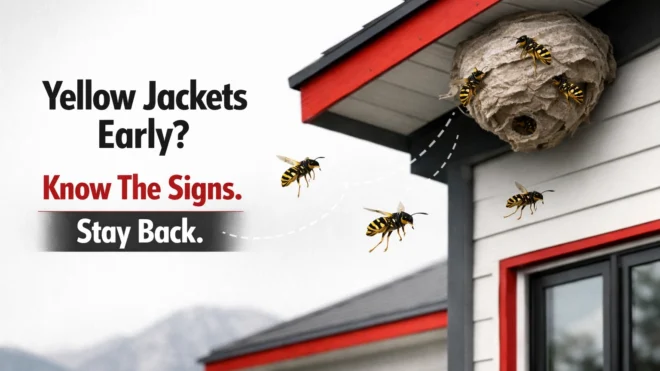
Few things disrupt a gorgeous Denver afternoon quite like the high-pitched buzz of a yellow jacket zipping past your ear. If you’ve stepped out onto your patio recently and felt like you were walking into a flight path, you’re definitely not alone.
It’s only April 2026, and yet, the buzz is already deafening. Thanks to our unseasonably warm winter here in the Mile High City, the local pest population has gotten a massive head start. Usually, we don't see this level of activity until late May, but this year is different. At A.P. Pest Control, our phones have been ringing off the hook: in fact, our calls for "denver exterminators" regarding stinging insects have nearly doubled compared to this time last year.
Yellow jackets aren't just your average annoying bug; they are territorial, protective, and: let’s be honest: a bit moody. Because the queens woke up early from their winter slumber, nests that would normally be the size of a golf ball right now are already reaching the size of a grapefruit or larger.
Identifying a nest early is the best way to keep your family safe and your backyard barbeques peaceful. Here are the five telltale signs that you have a yellow jacket nest on your property and why you might need a professional hand to handle it.
1. The "Airport" Effect: High-Traffic Flight Paths
The most obvious sign of a nest isn’t always the nest itself: it’s the traffic. If you notice a steady stream of yellow jackets flying in and out of a specific spot, you’ve found their "airport."
Yellow jackets are incredibly industrious. Once a colony is established, the workers spend their days foraging for food and bringing it back to the queen. If you stand back and observe your eaves, the corners of your deck, or even a hole in the ground, you’ll see them entering and exiting with rhythmic precision.
What to look for:
- A "highway" of insects moving in a straight line toward a single point.
- Increased activity during the warmest parts of the day.
- Wasps disappearing into a crack in your home's siding or a gap in the brickwork.
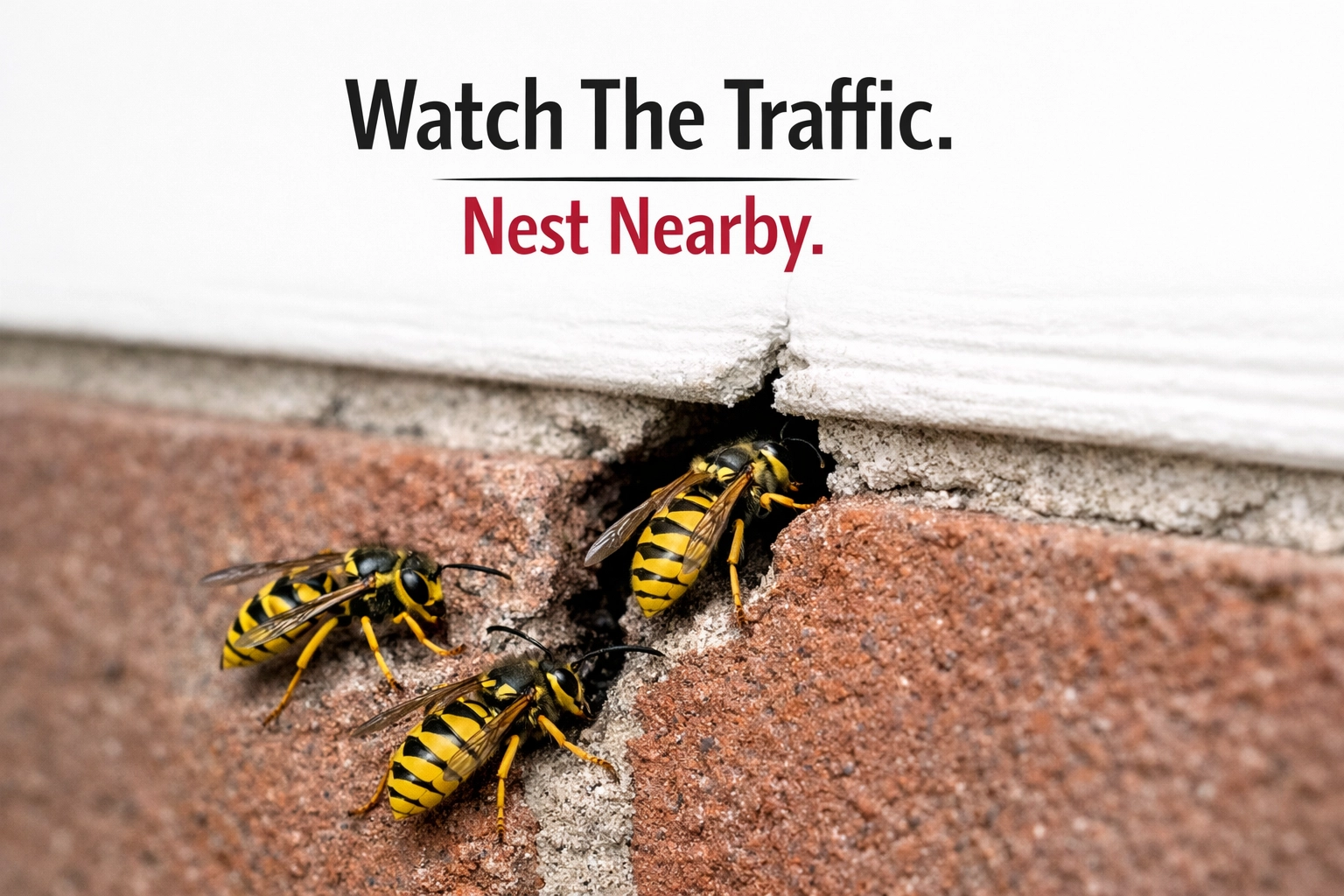
(Graphic Idea: A realistic close-up of a yellow jacket entering a small crevice in a wooden structure, showing the "traffic" concept.)
If you see this kind of concentrated activity near your doors or windows, it’s a sign that the nest is likely hidden just behind the surface. Trying to plug these holes yourself is a big "no-no": it often forces the yellow jackets to find a new exit, which could lead them right into the interior of your home.
2. Mysterious Scratching or Buzzing in the Walls
Sometimes you can’t see the problem, but you can definitely hear it. Because Denver has so many beautiful older homes with hollow wall voids, yellow jackets often find their way inside through tiny gaps in the exterior.
If you are sitting in a quiet room and hear a faint, rhythmic scratching or a low-frequency hum coming from behind the drywall, you aren't imagining things. This is often the sound of hundreds (or even thousands) of yellow jackets expanding their nest. They actually chew on the wood and drywall to create space for their growing colony.
Common "Audio" Red Flags:
- A "crinkling" sound, similar to paper being moved.
- A steady vibration that gets louder when you tap on the wall.
- Buzzing that seems to intensify in the evening when the foragers return home.
When you hear them in the walls, the situation is a bit more urgent. Left unchecked, they can actually chew through the drywall, leading to a very unpleasant surprise in your living room. As experienced denver exterminators, we’ve seen nests that have completely taken over wall segments between studs.
3. Visible "Paper" Structures in Protected Areas
While some yellow jackets prefer to hide, others are quite bold with their architecture. Yellow jacket nests are made from a paper-like material created by chewing up wood fibers and mixing them with saliva. The result is a gray or brownish, tiered structure that looks like it’s made of recycled cardboard.
In a typical Denver spring, these nests start small. But with the 2026 "super-bloom" of pests, we are seeing nests in April that look like they belong in August.
Where to check for visible nests:
- Under the eaves of your roof or porch.
- Inside attics or crawlspaces.
- Tucked away in dense shrubs or low-hanging tree branches.
- Inside birdhouses or unused outdoor equipment (like that grill you haven't opened yet!).
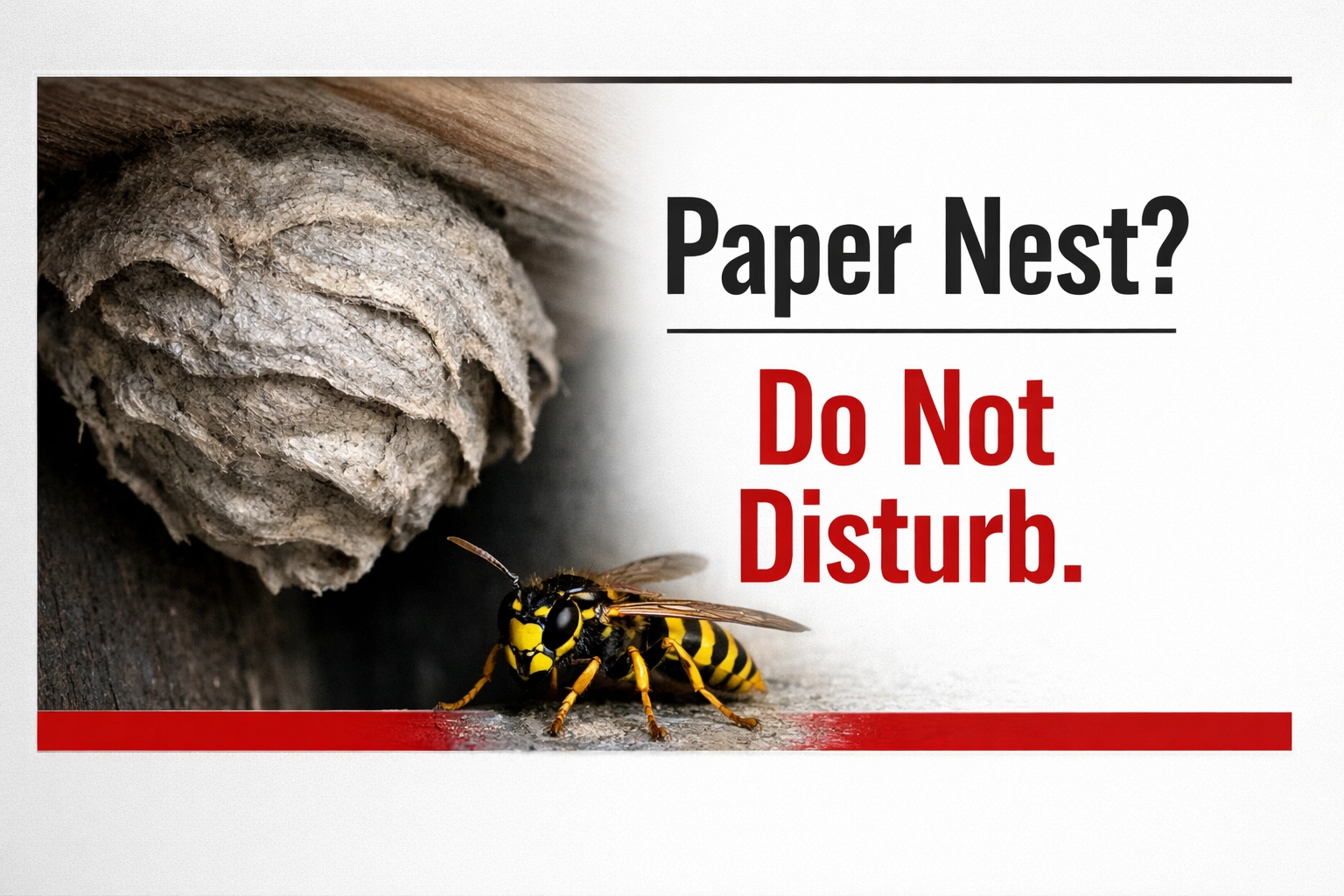
If you see a papery ball, do not: we repeat, do not: try to knock it down with a broom or spray it with a garden hose. Unlike honeybees, yellow jackets can sting multiple times and will swarm the moment they feel their home is under attack.
4. Unexplained Holes in the Ground
Not all yellow jackets are "high-flyers." Some species, like the Western Yellow Jacket, are notorious for building their homes underground. They love to take over abandoned rodent burrows or find soft spots in your landscaping.
If you’re mowing the lawn and notice a patch of dirt where yellow jackets seem to be "emerging" from the earth, you’ve likely stumbled upon a ground nest. These are particularly dangerous because they are so easy to accidentally step on.
Signs of a ground nest:
- Small, circular holes about the size of a nickel or quarter in your yard.
- Wasps hovering low over the grass or garden beds.
- Disturbed dirt or "mounds" near the entrance of a hole.
Ground nests are a major hazard for children and pets who might be playing in the yard. Because the nest is subterranean, the colony can be much larger than you expect, as they have plenty of room to expand downward.
5. Heightened Aggression and "Bumping"
Yellow jackets are the "bodyguards" of the insect world. They have a very large "buffer zone" around their nests. If you find that wasps are "dive-bombing" you or "bumping" into you while you’re simply walking across your deck, they are trying to tell you something.
This "bumping" behavior is a warning shot. They are physically marking their territory and trying to intimidate you into leaving. If you ignore the warning, the next step is usually a sting.
Recognizing defensive behavior:
- Wasps flying directly at your face or chest without landing.
- Multiple wasps hovering around you the moment you step into a certain area.
- A sudden "cloud" of wasps appearing when you move an object (like a patio chair or a flower pot).
With the current surge in activity, these colonies are more stressed and more protective than usual. The early heat of 2026 has made them particularly active, meaning their defensive instincts are dialed up to eleven.

Why Choose a Local Family Business?
When you’re dealing with a pest as aggressive as the yellow jacket, you want someone who knows the local landscape. A.P. Pest Control isn't some giant, faceless corporation. We are a locally owned family business that lives and works right here in the Denver metro area.
When you call us, you’re likely talking to someone who knows exactly which neighborhoods in Aurora or Brighton are seeing the most activity this week. Our team: including Elijah, Tim, and Mat: treats every home like it’s our own. We understand that your backyard is your sanctuary, and we want to help you get it back.

Our 100% Satisfaction Guarantee
We believe in doing the job right the first time. That’s why we offer a 100% satisfaction guarantee. If the "stinging roommates" decide to come back after we’ve treated the area, so do we: at no extra cost to you. We want you to feel confident and safe in your own home.
Whether you're dealing with yellow jackets, rodents, or even bed bugs, we have the tools and the expertise to handle it safely.
What to Do if You Find a Nest
If you’ve checked off one or more of the signs above, the best thing you can do is keep your distance.
- Mark the area: If it’s a ground nest, put a lawn chair or a cone nearby (but not on it) so family members know to stay away.
- Keep pets inside: Dogs and cats are often curious about the "buzzing holes" and can get severely injured by multiple stings.
- Call the pros: Don't risk a trip to the emergency room.
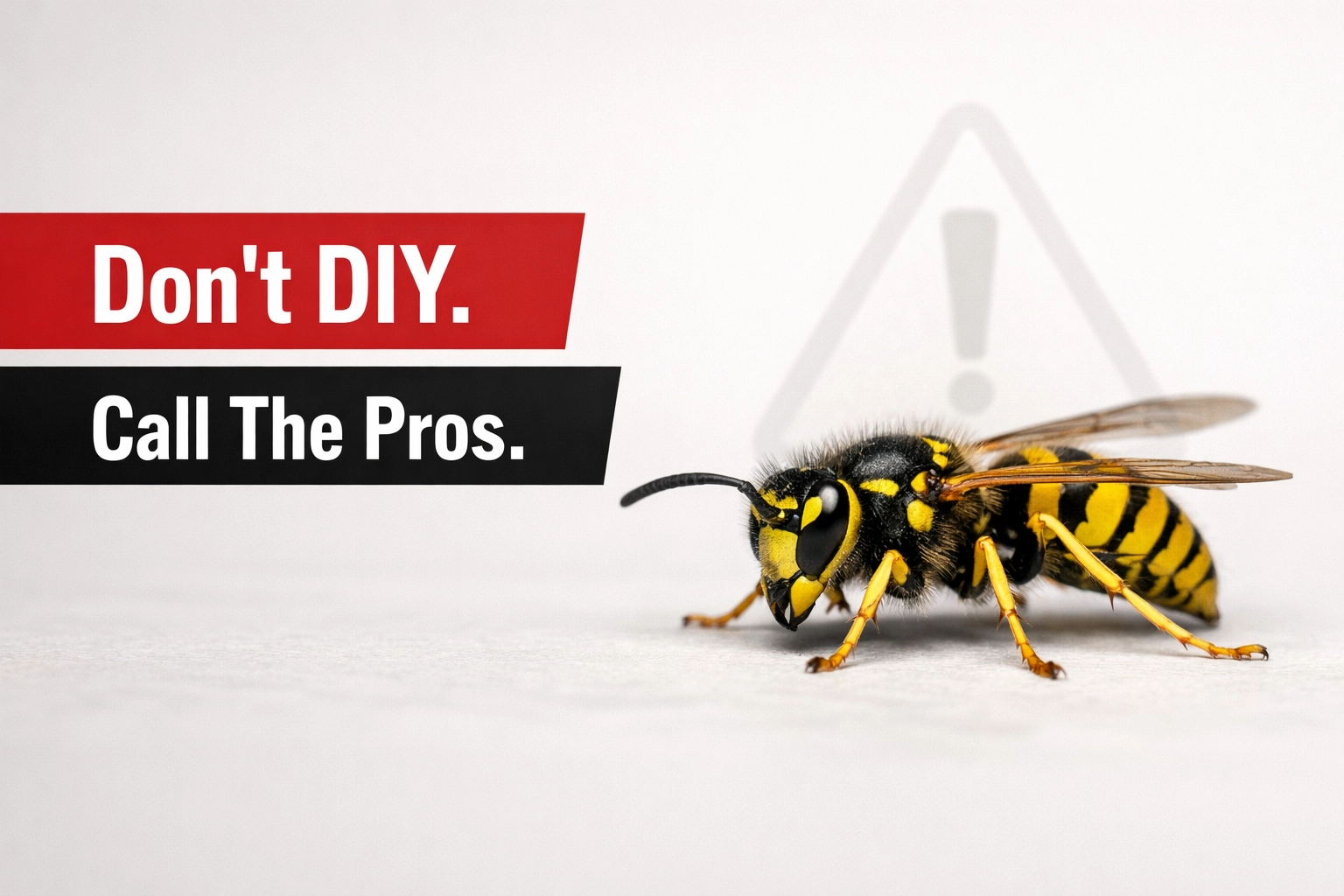
(Graphic Idea: A minimalist "Stop" sign style graphic with the text "Don't DIY the Sting!" and the A.P. Pest Control logo.)
The 2026 season is shaping up to be a record-breaker for pests in Colorado. Don't let your spring be ruined by an early infestation. If you suspect you have a nest, reach out to the team at A.P. Pest Control today. We’ll get out there, perform a thorough inspection, and make sure those yellow jackets find a new place to live: somewhere far away from your patio!
Visit our About Us page to learn more about our family and how we’ve been serving the Denver community. Let’s make this summer sting-free!
SEO Keyphrase: denver exterminators
Meta Description: Are yellow jackets taking over your Denver yard early this year? Learn the 5 signs of a nest and why 2026 is a record season. Call A.P. Pest Control today!