To get rid of mice, confirm the signs, find and seal entry points with metal mesh or mortar, remove easy food and water sources, reduce clutter, and set snap traps along walls near fresh activity. Clean droppings safely, never by dry sweeping or vacuuming. Consider professional help if fresh signs continue or appear in several areas.
Finding a mouse, or even one fresh dropping, in your home can make you feel like your space is no longer your own. You’re not alone, and a clear plan can help. By mid-October, cooler Front Range nights often encourage mice to look for shelter indoors, so this is a good week to inspect, seal and act.
Step 1: How Can You Confirm It’s Mice?
Before you choose a treatment, make sure the signs are consistent with mice and note where they appear. Droppings, gnaw marks, or repeated nighttime sounds can be clues, but one sign alone may not identify the animal. If you’re unsure whether you’re dealing with mice or rats, avoid handling anything and get a closer inspection.
- Note where you find fresh droppings or damage, and whether signs appear in more than one room.
- Take a photo from a safe distance if you need help identifying a sign.
- For more on recognizing activity, see our guide to signs of mice in a Denver home.
Next, use those locations to guide your search for how mice are getting inside.
Step 2: Where Should You Look for Entry Points?
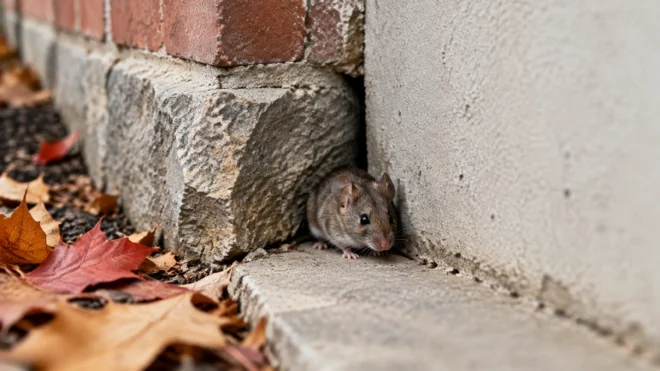
Start outdoors and inspect the places where the home meets the ground or utilities pass through the walls. A mouse can squeeze through a surprisingly small opening, so check gaps around pipes, cables, vents and doors, not only obvious foundation cracks. Older central Denver homes with brick or stone foundations may have worn mortar or settling gaps worth a close look.
Walk the outside perimeter with a flashlight. Pay special attention to:
- Gaps around utility lines and plumbing
- Cracks where brick, stone or siding meets the foundation
- Garage door edges, corners and weatherstripping
- Crawlspace vents, basement windows and exterior doors
- Openings where the dryer vent or other ducts exit
Inside, check the areas near fresh signs, including under sinks, behind appliances, in the garage and around crawlspace access. Don’t enter an unsafe or contaminated space just to investigate. Once you’ve found likely routes, choose a durable repair.
Step 3: How Do You Seal Mouse-Sized Gaps Correctly?
Close entry points with materials that mice are less likely to chew through or push aside. Use metal mesh, hardware cloth or mortar where appropriate; for small gaps, mesh secured with a suitable sealant can work. Steel wool alone is not a lasting repair: it can shift, and ordinary steel wool may rust in damp areas.

- For narrow gaps, fit metal or copper mesh firmly, then secure it with a compatible sealant.
- For larger cracks in masonry, use an appropriate mortar repair or hire a qualified contractor.
- Replace worn door sweeps and weatherstripping; repair damaged screens and cover vents with rodent-resistant mesh.
- Don’t rely on expanding foam by itself. Mice can often chew through it.
If you can’t safely reach a gap, or aren’t sure how to repair it without affecting wiring or ventilation, leave that repair to a qualified professional. Then make the inside of your home less rewarding to explore.
Step 4: How Can You Remove Easy Food and Water Sources?
Store food and pet food in closed, hard-sided containers, clean up crumbs and spills, and secure trash. These habits won’t remove mice already indoors, but they make your kitchen and storage areas less attractive while you trap and seal. Check for water sources, too, since a leak or standing water can make a room more inviting.
This week, try to:
- Move pantry food, birdseed and pet food out of open bags or cardboard boxes.
- Pick up pet bowls overnight and clean food residue around the feeding area.
- Use trash cans with tight-fitting lids, and rinse recyclables before storing them.
- Fix drips and wipe up standing water under sinks or near appliances.
- Sweep crumbs and clean up spills promptly.
With food secured, the next step is to reduce quiet nesting spots.
Step 5: How Can You Reduce Places Mice Can Hide?
Clear clutter from garages, basements, storage rooms and the edges of rooms where you’ve found signs. Mice can use undisturbed boxes, fabric and paper for shelter or nesting, so raising stored items off the floor makes it easier to inspect and keep those areas clean.
- Replace cardboard storage boxes with sealed plastic bins where practical.
- Keep firewood, yard debris and stored materials away from the foundation.
- Trim dense vegetation that touches the house, and tidy areas near garage and crawlspace entrances.
- Leave a visible gap around stored items so you can check baseboards and corners.
A less cluttered space is easier to monitor. Now you can place traps where mice are actually traveling.
Step 6: Which Traps Should You Use, and Where Should You Place Them?
For many household situations, correctly placed snap traps are a practical first choice. Set them along walls near fresh activity, with the baited end touching the wall, and keep them away from children and pets. The CDC’s trapping guidance recommends snap traps and gives placement and monitoring advice.

- Use a small dab of peanut butter or another suitable bait on the trigger.
- Place traps behind appliances or along walls where you found fresh signs.
- Check traps daily and follow the product directions for setting and disposal.
- Don’t use glue boards or live traps as a substitute for removing mice and closing entry points. The CDC advises against them.
Keep traps inaccessible to children and pets. Never place rodenticide where a child or pet could reach it. Bait products can poison pets or wildlife if misused; don’t use them casually in the home. If you believe bait is necessary, ask a pest professional about safer options and follow all product-label instructions.
How Should You Clean Mouse Droppings or a Dead Rodent Safely?
Take precautions before cleaning, because rodent waste can carry germs, including hantavirus. Keep children and pets away, ventilate a closed area, wear rubber or disposable gloves, and wet droppings or nesting material thoroughly with disinfectant before wiping them up. Never dry-sweep or vacuum rodent droppings.

- Follow the disinfectant label and let it remain wet for the directed contact time.
- Wipe up the material with paper towels and place waste in a sealed bag.
- For a dead rodent, disinfect it and the surrounding area before disposal; double-bag the carcass.
- Wash your hands after removing gloves.
For detailed directions, follow the CDC’s rodent cleanup guidance. Heavy contamination, extensive nesting or droppings in an inaccessible crawlspace may call for professional help. Otherwise, monitor your traps and the areas you’ve sealed.
Step 7: When Should You Stop DIYing and Call a Professional?
A small, contained mouse problem may be manageable with careful trapping, sanitation and exclusion. Consider professional help if fresh signs continue, activity appears in several areas, you can’t locate an entry point, or mice may be inside a wall, attic or crawlspace. Chewed wiring and significant contamination are also reasons to get qualified help.
You can often keep handling the situation yourself if you’ve found and sealed the entry point, activity is limited and fresh signs stop. If not, an inspection can identify what your traps and repairs may be missing.
A.P. Pest Control is locally owned and serves Denver-area homes. We’ll give you honest recommendations, not push a service you don’t need. If you’d like advice, call (720) 327-1750 or contact our team. Our work comes with a 100% satisfaction guarantee. Here’s more about our mice pest control service.
Step 8: How Can You Keep Mice Out of Your House Next Time?
After activity stops, keep checking for new signs and make exclusion part of your home’s routine. Before the next cold snap, inspect the garage, foundation, utility gaps and crawlspace entry again. In Denver neighborhoods from Aurora and Lakewood to Arvada and central Denver, seasonal temperature drops can prompt mice to seek shelter, so prevention works best when you maintain it year-round.
- Recheck door sweeps, screens and repairs after storms or home projects.
- Keep stored food sealed and reduce clutter in garages and basements.
- Look for new gaps where pipes, cables or vents enter.
- Monitor repaired areas for fresh droppings or gnaw marks.
For a broader look at prevention and local rodent concerns, see our Denver rodent-control overview. If activity returns despite these steps, a professional inspection can help you address the source rather than repeat the same fixes.
What Mouse-Control Methods Should You Not Rely On?
Peppermint oil, ultrasonic devices and cats are not dependable standalone solutions. A scent or sound may change where a mouse travels temporarily, and a cat may catch one, but none seals entry points or confirms that mice are gone. Poison is not a safe shortcut around children or pets; never place it where they can reach it.
Our article on ultrasonic mouse repellents explains why they’re not a substitute for trapping and exclusion. Focus your effort on steps you can verify: repair gaps, secure food, set traps safely and monitor for fresh signs.
How to Get Rid of Mice: Frequently Asked Questions
The right timeline depends on how many mice are present, whether they’re still getting inside, and how quickly you address the entry points. These quick answers can help you decide what to do next. If activity persists or cleanup feels unsafe, ask a pest professional for guidance rather than guessing.
How long does it take to get rid of mice?
It varies. Trapping and sealing can take days or longer, depending on activity and whether new mice can still enter. Continue monitoring for fresh signs and check traps regularly.
Will mice leave if I seal the holes?
Sealing entry points helps keep additional mice from entering, but it may not remove mice already inside. Pair exclusion with safe trapping and follow-up checks.
Can I use poison if I have pets or children?
Never use rodenticide where children or pets can reach it. If you’re considering a bait product, consult a pest professional and follow its label exactly.
What kind of trap is a good first choice for mice?
For many household situations, correctly placed snap traps are a practical first choice. Set them along walls near fresh activity, with the baited end touching the wall, and keep them away from children and pets.
Do peppermint oil or ultrasonic devices get rid of mice?
Peppermint oil, ultrasonic devices and cats are not dependable standalone solutions. A scent or sound may change where a mouse travels temporarily, but none seals entry points or confirms that mice are gone.