
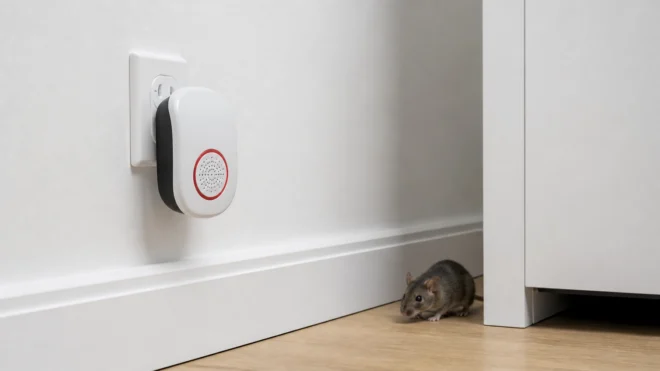
Few things disrupt your peace of mind like hearing scratching near a baseboard after everyone else has gone to bed. You may spot a small gap near a pipe, garage door, or foundation and wonder whether an ultrasonic mouse repellent could be the quick, chemical-free answer.
You’re not alone in asking. Ultrasonic devices are widely advertised as an easy way to make mice leave without traps or other treatments. But the research is mixed, and the real-world results often fall short of the promises.
At A.P. Pest Control, we do not sell or use ultrasonic repellents. We believe you deserve an honest explanation of what these devices may: and may not: do before you spend money on one. Here’s what Denver homeowners should know.
What Is an Ultrasonic Mouse Repellent?
An ultrasonic mouse repellent is a plug-in or battery-powered device designed to emit high-frequency sound. The sound is generally above the range most people can hear, while mice and other rodents may be able to detect it.
Manufacturers often claim that the sound:
- Irritates mice and rats
- Makes an area uncomfortable
- Drives rodents away from walls, basements, garages, or attics
- Prevents new rodents from entering
- Works without traps or pesticides
The idea sounds appealing. Plug in a device, wait for the mice to leave, and avoid dealing with an infestation directly.
The problem is that a mouse hearing an unusual sound is not the same as a mouse abandoning a home. Rodents are resilient, and a warm, safe space with food and nesting material can be more valuable to them than the discomfort caused by a sound source.
That distinction becomes especially important during cold Denver nights, when mice seek shelter indoors.
Do Ultrasonic Mouse Repellents Actually Work?
The short answer is: not reliably as a standalone solution.
Some studies show that rodents initially avoid an area when a new ultrasonic device is turned on. However, that avoidance is often temporary. A 2026 review of ultrasonic pest-control research found that rodents may show short-term behavioral changes but can become accustomed to the sound within approximately three to seven days. The review also found no measurable reduction in rodent populations under field conditions.
Other field trials and literature summaries report little or no lasting repellent effect in actual homes and buildings. Results can vary depending on:
- The species of rodent
- The device’s sound pattern and placement
- The size and layout of the building
- Whether walls, furniture, or other objects block the sound
- The availability of food, water, shelter, and nesting material
- How long the rodents have already been living inside
In other words, a device may change mouse activity briefly without solving the underlying problem. When the sound becomes familiar: or when the mouse has strong reasons to stay: normal activity can return.
Why the Evidence Can Look Confusing
You may find testimonials from homeowners who say an ultrasonic repellent worked. You may also see product studies showing fewer mouse sightings or droppings after a device is turned on.
Those reports should not necessarily be dismissed, but they need context.
One 2018 field test involving Transonic PRO units reported fewer mice caught and fewer droppings when the unit was on. However, the ultrasonic device was used alongside snap traps, and the test took place in a specific home under specific conditions. It does not prove that the ultrasonic unit alone eliminated the infestation.
That study is one reason the evidence cannot be summarized as “ultrasonic devices never affect rodents.” Some devices may cause temporary avoidance in some situations. But broader research has not shown consistent, lasting control across real homes.
A useful way to evaluate the claims is to ask:
- Did the device work by itself, or was it combined with traps and exclusion?
- Was the test performed in a laboratory or an occupied building?
- Did the study measure fewer sightings, or an actual reduction in the rodent population?
- How long did the effect last?
- Was the research independently conducted and controlled?
These questions help separate a short-term change in activity from dependable rodent removal.
Potential Pros of Ultrasonic Repellents
Although A.P. Pest Control does not use or recommend ultrasonic repellents as a primary treatment, there are a few reasons homeowners consider them.
They are easy to install
Most devices simply plug into an outlet. You do not need to handle traps or place products in areas where children and pets may reach them.
They do not use traditional pesticides
For homeowners who prefer to avoid pesticide applications, an ultrasonic device may appear attractive. It also does not leave a chemical residue.
They may cause short-term avoidance
A new sound source can sometimes make mice change their movement patterns temporarily. That may create the impression that the problem has disappeared.
However, a temporary change is not proof that the mice are gone. They may be hiding elsewhere in the home, moving through wall voids, or waiting until the sound no longer feels threatening.
Important Cons and Limitations
The limitations are more significant when you are dealing with an active infestation.
Mice can become accustomed to the sound
Research indicates that rodents often habituate to ultrasonic sounds within about three to seven days. Once the device becomes part of the background environment, mice may resume traveling, feeding, and nesting nearby.
Sound does not seal an entry point
A repellent cannot close the gap where a mouse enters. In Denver-area homes, possible entry points often include:
- Gaps around utility lines and plumbing
- Openings near garage doors
- Cracks around foundations
- Roof and attic vents
- Damaged weather stripping
- Spaces beneath cabinets or behind appliances
A mouse can fit through an opening about the width of a pencil, so even a small gap can matter. If the entry point remains open, new rodents can continue coming inside.
Results can be blocked by walls and furnishings
Ultrasonic sound generally does not travel effectively through walls, doors, cabinets, or heavy furniture. A device in one room may not reach a mouse nesting behind the refrigerator, inside a wall, or in an attic.
It does not remove mice, nests, or contamination
Even if mouse activity seems quieter, droppings, urine, nesting material, and chewed wiring may remain. Rodents can also damage insulation and electrical components.

Do not ignore chewed wires or persistent scratching. Rodent damage can create a fire risk, and droppings should be cleaned carefully. Avoid sweeping or vacuuming dry rodent waste, which can send contaminated particles into the air. Wear gloves, ventilate the area, and follow appropriate public-health cleaning guidance.
What Actually Helps Prevent Mice?
Lasting rodent prevention usually requires several steps working together. The goal is not simply to make a mouse move to another room. It is to address why rodents entered and whether they are still active inside.
1. Inspect and seal entry points
Walk around your home’s exterior, paying close attention to:
- Foundation-to-siding transitions
- Garage corners and door seals
- Areas where pipes and cables enter the structure
- Crawl-space vents
- Basement windows
- Roofline and attic openings
Use durable materials that mice cannot easily chew through. Steel wool combined with an appropriate sealant can help with small openings, while larger gaps may require metal mesh, hardware cloth, mortar, or professional repairs.
2. Remove food and water sources
Mice are opportunistic feeders. Store food in sealed containers and clean up crumbs promptly. Also check less obvious sources, including:
- Pet food left out overnight
- Birdseed in garages or sheds
- Open trash containers
- Fallen fruit
- Grease beneath appliances
- Leaking pipes or condensation
Reducing access to food and water makes your home less attractive while other control measures take effect.
3. Monitor for continuing activity
Look for telltale signs such as:
- Fresh droppings
- Gnaw marks
- Greasy rub marks along walls
- Shredded paper or insulation
- Scratching sounds
- Unusual pet interest in a wall or cabinet
Fresh signs appearing after you install an ultrasonic device suggest that the underlying issue is still active.
4. Address the infestation at its source
If mice are already nesting inside a wall, attic, basement, or crawl space, prevention alone may not be enough. A professional inspection can help identify movement patterns, entry points, nesting areas, and the safest control strategy for your household.
At A.P. Pest Control, our rodent service combines inspection, targeted control, minor exclusion work when appropriate, and follow-up. Our rodent removal service explains what that process can include, while our mice pest control page provides more specific information for mouse concerns.

When Should You Call a Professional?
You do not have to wait until you see several mice before asking for help. Consider scheduling an inspection if:
- You hear scratching repeatedly
- You find fresh droppings in more than one area
- You see a mouse during the day
- You notice chewed electrical wiring
- You find nesting material
- Traps do not resolve the activity
- You live in a multi-unit property or manage a commercial building
- Someone in the home has heightened health concerns
Be especially cautious with loose traps, rodenticide, and DIY repairs around children and pets. Bait and traps should be placed and monitored carefully, and suspected contamination should be handled responsibly.

The Bottom Line for Denver Homeowners
Ultrasonic mouse repellents may cause brief avoidance in some situations, but current evidence does not support relying on them to remove an infestation. Rodents can habituate to the sound within several days, and field research has not shown dependable population reduction.
If you decide to try one, treat it as an optional experiment: not your primary control method. Continue monitoring for signs, seal openings, remove food sources, and take action if activity continues.
The most reliable approach focuses on the entire problem: keep mice out, remove the rodents already inside, and follow up to make sure the activity has stopped. That can restore your home and your peace of mind.
If you are hearing scratching or finding signs of mice in the Denver metro area, contact A.P. Pest Control at (720) 327-1750 or request a free quote. We provide honest pricing, personal service, and a 100% satisfaction guarantee because we treat every customer like family.
Frequently Asked Questions
Are ultrasonic mouse repellents safe?
They are generally designed to be inaudible to humans, but product performance and effects on pets can vary. Read the manufacturer’s instructions and consult your veterinarian if you have concerns about dogs, cats, rabbits, rodents, or other animals in the home.
How long does it take for an ultrasonic repellent to work?
Some homeowners notice a change in activity during the first few days, but that does not mean the mice are gone. Research indicates that rodents can become accustomed to the sound within approximately three to seven days.
Can ultrasonic repellents keep mice from entering my home?
They cannot reliably prevent entry because they do not seal cracks or gaps. Exclusion remains one of the most important parts of long-term rodent prevention.
What should I do first if I hear mice?
Look for fresh droppings and possible entry points, secure food and pet food, and avoid disturbing nesting areas unnecessarily. If signs continue: or if you find chewed wiring: schedule a professional inspection.
Does A.P. Pest Control use ultrasonic mouse repellents?
No. A.P. Pest Control does not sell or use ultrasonic repellents. We focus on inspection, targeted rodent control, exclusion, sanitation guidance, and follow-up to address the source of the problem.